
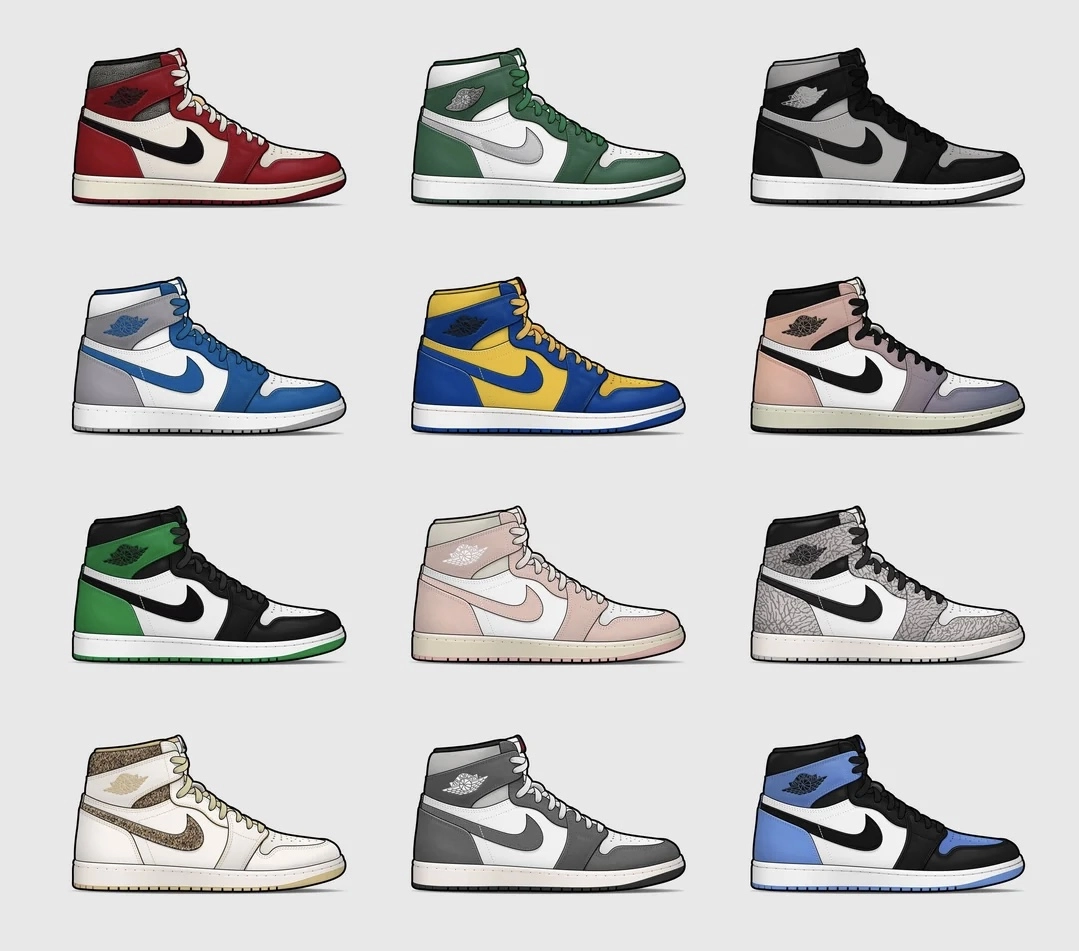
The Air Jordan 1 is widely considered the foundation of sneaker culture in the United States. Since its debut in 1985, the model has evolved into a full series that includes classic retros, high-profile collaborations, and modern updates that appeal to both collectors and everyday wearers.
Rather than focusing on a single release, understanding the Air Jordan 1 as a series helps buyers make smarter decisions—especially when choosing between heritage colorways, collaborative designs, and newer low-top options.
The Core of the Air Jordan 1 Series
At its heart, the Air Jordan 1 is defined by a simple, timeless structure. The high-cut silhouette, clean paneling, and unmistakable Swoosh have allowed the design to remain relevant across generations.
In the U.S. market, this simplicity is a major advantage. Consumers value sneakers that work across different outfits and lifestyles, and the Air Jordan 1 delivers that flexibility better than most basketball silhouettes.
Exploring the full lineup through the Jordan 1 quickly shows how one design can support dozens of identities without losing its original character.
Heritage Colorways That Define the Legacy
Some Air Jordan 1 releases are important not just because they look good, but because they carry historical meaning. These colorways often attract both long-term collectors and newer buyers who want a piece of sneaker history.
A prime example is the Jordan 1 Retro High OG Chicago Lost and Found DZ5485-612. This release reintroduced the iconic Chicago colorway with aged details that reference the original 1980s era. In the U.S., it is widely viewed as one of the most faithful modern tributes to the original Air Jordan 1.
Heritage models like this tend to offer strong long-term appeal, both in wearability and cultural relevance.
Collaborations That Push the Series Forward
While history plays a major role, collaboration has been equally important in keeping the Air Jordan 1 fresh. Strategic partnerships introduce new materials, storytelling, and design philosophies without abandoning the original silhouette.
The Jordan 1 Retro High OG SP Fragment x Union LA Varsity Red Sport Royal IO7847-002 represents this evolution perfectly. By combining Fragment’s minimalist branding with Union LA’s layered design approach, this release appeals strongly to U.S. sneaker fans who value creativity and exclusivity.
Collaborative Jordan 1s often serve as statement pieces, blending fashion influence with basketball heritage.
Low-Top Jordan 1s and Modern Wearability
In recent years, low-top versions of the Air Jordan 1 have seen rapid growth in popularity, especially in the U.S. market. Consumers increasingly prioritize comfort, ease of wear, and seasonal versatility.
The Jordan 1 Retro Low OG Chicago (2025) HQ6998-600 reflects this shift. It delivers classic Chicago colors in a more casual, everyday-friendly form, making it ideal for warmer weather and relaxed styling.
Low-top Jordan 1s often appeal to buyers who want the legacy look without committing to a high-cut silhouette.
Choosing the Right Jordan 1 for You
When selecting an Air Jordan 1, the decision often comes down to intent. Heritage models emphasize history and authenticity. Collaborative releases focus on design and exclusivity. Low-top versions prioritize lifestyle comfort and versatility.
All three approaches are valid, and the strength of the Air Jordan 1 series lies in its ability to serve each of them without compromise.
For the latest availability, new releases, and restocks, checking the HKSneaker is the easiest way to stay updated.
Final Thoughts
The Air Jordan 1 is not just a sneaker—it’s a platform that supports decades of storytelling, design evolution, and cultural influence. Whether you’re drawn to classic colorways, innovative collaborations, or modern lifestyle updates, the Jordan 1 series offers an entry point for every type of sneaker enthusiast.
Understanding the series as a whole makes it easier to appreciate why the Air Jordan 1 continues to dominate sneaker culture in the United States.
0 Comments